Last updated: May 2026
Indonesia Tax ID (NPWP) Explained: Complete Guide for Foreigners, Freelancers, and Businesses
TL;DR: Indonesia’s Tax Identification Number is called NPWP (Nomor Pokok Wajib Pajak). It is commonly required for tax filing, employment, banking, investments, business registration, and financial compliance in Indonesia.
NPWP is Indonesia’s official Tax Identification Number (TIN) used by individuals and businesses for tax reporting, financial services, employment administration, and legal compliance.
Indonesia’s Tax Identification Number, officially known as NPWP, is issued by the Directorate General of Taxes (DJP) and serves as the primary taxpayer identification system in Indonesia.
If you live, work, freelance, invest, or operate a business in Indonesia, understanding how the Indonesian tax identification system works is essential for tax compliance, banking, onboarding procedures, and financial administration.
In practice, many banks, employers, fintech companies, and financial institutions in Indonesia will request your NPWP during onboarding and compliance procedures.
This guide explains how Indonesia’s NPWP system works, who needs an NPWP, how foreigners and remote workers can apply, and how NPWP is used in banking, taxation, digital reporting, and business operations.
This article was reviewed for accuracy based on publicly available information from Indonesian tax authorities and government resources.
This guide reflects Indonesian tax administration practices as of 2026.
Indonesia NPWP Key Facts
| Question | Answer |
|---|---|
| Indonesia TIN Name | NPWP |
| Issued By | Directorate General of Taxes (DJP) |
| Main Purpose | Tax reporting and compliance |
| Mandatory? | Usually required for taxable income |
| Used By | Individuals and businesses |
| Application Methods | Online and in-person |
Quick Answer: Indonesia’s Tax Identification Number (TIN) is called NPWP. It is used for tax filing, banking, employment, investments, business licensing, KYC procedures, and financial compliance throughout Indonesia.
Table of Contents
- What Is an NPWP?
- Is NPWP the Same as a TIN?
- Example of an Indonesian NPWP Number
- Official Indonesian Tax Authority
- NPWP and Tax Residency in Indonesia
- NPWP for Foreigners Living in Indonesia
- Do Remote Workers Need an NPWP?
- NPWP for Businesses and Companies
- NPWP and Indonesian Banking Services
- NPWP and VAT (PPN)
- Who Needs an NPWP?
- How to Apply for an NPWP
- How to Find Your NPWP
- How to Check Your NPWP Status
- How to Update NPWP Information
- Common Situations Where NPWP Is Required
- Digital Tax Services in Indonesia
- Why NPWP Is Important
- NPWP and Tax Obligations
- Penalties for Non-Compliance
- Common NPWP Mistakes to Avoid
- Difference Between NPWP and NIK
- Can an NPWP Be Deactivated?
- How to Verify an Indonesian NPWP
- Frequently Asked Questions
What Is a Tax Identification Number (NPWP)?
An NPWP (Nomor Pokok Wajib Pajak) is Indonesia’s official taxpayer identification number issued by the Directorate General of Taxes (DJP - Direktorat Jenderal Pajak).
The NPWP is assigned to individuals and legal entities to identify taxpayers within Indonesia’s tax administration system.
It is commonly used for:
- Tax administration and reporting
- Income tax filing
- Employment and payroll administration
- Business registration and licensing
- Banking and financial services
- Investment and securities activities
- VAT and withholding tax procedures
The Indonesian government uses NPWP to simplify tax administration, improve compliance, and support digital tax reporting systems.
Is NPWP the Same as a Tax Identification Number (TIN)?
Yes. In Indonesia, the NPWP functions as the country’s official Tax Identification Number (TIN) for individuals and businesses.
In international compliance and financial reporting contexts, Indonesia’s NPWP is commonly referred to as the Indonesian TIN.
Employers, banks, tax authorities, fintech platforms, and financial institutions use NPWP for:
- Tax reporting and compliance
- Income verification
- Financial onboarding procedures
- KYC and AML compliance
- Business administration
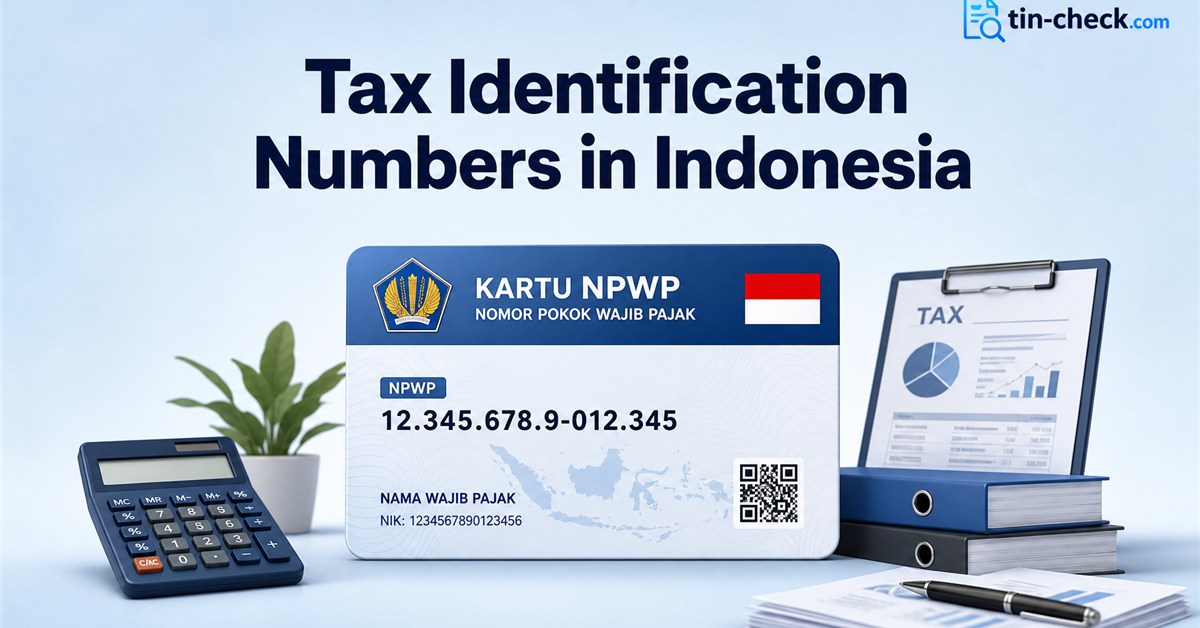
Example of an Indonesian NPWP Number
An Indonesian NPWP generally follows a numeric format such as:
12.345.678.9-012.345
The exact structure may vary depending on taxpayer category and registration details.
Important: Your NPWP should only be shared with authorized institutions such as employers, banks, tax authorities, and government agencies.
Official Indonesian Tax Authority
Indonesia’s tax administration system is managed by the Directorate General of Taxes (DJP), which operates under the Ministry of Finance Indonesia.
The DJP manages:
- NPWP registration
- Tax filing systems
- Digital tax services
- Taxpayer compliance
- Electronic reporting platforms
Taxpayers may interact with the DJP through online portals or local tax offices known as Kantor Pelayanan Pajak (KPP).
NPWP and Tax Residency in Indonesia
Individuals staying in Indonesia for extended periods or earning Indonesian-sourced income may become Indonesian tax residents and therefore may need an NPWP.
Tax residency can affect:
- Income tax obligations
- Withholding tax rates
- Reporting responsibilities
- International tax compliance
Foreign professionals, expatriates, freelancers, investors, and remote workers should carefully assess their Indonesian tax residency obligations.
NPWP for Foreigners Living in Indonesia
Foreign nationals living or working in Indonesia may need an NPWP if they earn taxable income within the country.
This commonly applies to:
- Expatriate employees
- Business owners
- Long-term residents
- Foreign consultants and freelancers
- Remote workers
- Foreign investors
Many expatriates first become aware of NPWP requirements when signing employment contracts or opening local bank and investment accounts.
Foreign applicants may need:
- KITAS or residence permit
- Passport
- Proof of address
- Employment or business documentation
Do Remote Workers Need an NPWP in Indonesia?
Remote workers earning Indonesian-sourced income or meeting Indonesian tax residency requirements may need an NPWP.
This may include:
- Digital nomads
- Freelancers
- Remote employees
- Consultants working from Indonesia
Tax obligations may vary depending on residency status, income sources, and applicable tax treaties.
NPWP for Businesses and Companies
Companies and legal entities operating in Indonesia generally require an NPWP before beginning formal business activities.
Business NPWP registration is important for:
- Corporate income tax reporting
- VAT (PPN) compliance
- Invoice issuance
- Government tenders
- Import and export operations
- Withholding tax administration
- Business licensing procedures
PT companies, startups, partnerships, and other entities usually require NPWP registration for operational and compliance purposes.
NPWP and Indonesian Banking Services
Many Indonesian banks and financial institutions request NPWP information during account opening and onboarding procedures.
NPWP may be required for:
- Opening bank accounts
- Applying for loans
- Credit and mortgage applications
- Investment and brokerage services
- Financial compliance checks
Financial institutions and compliance teams often use taxpayer verification procedures as part of KYC and AML onboarding requirements.
NPWP and VAT (PPN)
Businesses operating in Indonesia may also need to comply with VAT requirements known locally as PPN (Pajak Pertambahan Nilai).
NPWP registration is often connected to:
- VAT registration procedures
- Tax invoice issuance
- Business compliance obligations
- Corporate reporting systems
Who Needs to Have an NPWP?
Generally, anyone earning taxable income in Indonesia should register for an NPWP.
- Indonesian citizens earning income domestically or internationally
- Foreign nationals working or operating businesses in Indonesia
- Freelancers and self-employed individuals
- Companies and corporations
- Partnerships and organizations
- Non-resident taxpayers with Indonesian-sourced income
How to Apply for an NPWP
Eligibility Requirements
Applicants generally need:
- Valid identification documents
- KTP for Indonesian citizens
- KITAS or passport for foreigners
- Proof of domicile or address
- Business registration documents for companies
- Completed NPWP application forms
Online Application
You can apply online through the official DJP e-Registration portal.
Online applications are commonly used for faster processing and document submission.
In-Person Application
Applicants may also visit their local tax office (Kantor Pelayanan Pajak - KPP) for direct registration and verification.
Processing times vary, but many applications are completed within several business days after successful verification.
How to Find Your NPWP
You can find your NPWP on:
- Your NPWP card
- Tax registration documents
- DJP online tax services
- Certain tax filing records
How to Check Your NPWP Status
Taxpayers may check their NPWP registration status through official DJP systems or by contacting their local tax office.
Status checks may be useful when:
- Updating taxpayer information
- Applying for financial services
- Completing compliance procedures
- Confirming active taxpayer status
How to Update NPWP Information
Taxpayers should update their NPWP information whenever personal or business details change.
- Address changes
- Marital status updates
- Business activity modifications
- Ownership changes
- Taxpayer status updates
Updates may often be completed through DJP online systems or local tax offices.
Common Situations Where NPWP Is Required
- Filing annual tax returns
- Submitting monthly tax reports
- Opening Indonesian bank accounts
- Receiving salary payments
- Applying for loans or mortgages
- Registering businesses
- Participating in government tenders
- VAT registration and invoicing
- Investment and securities transactions
- Using e-Filing and e-Bupot systems
Digital Tax Services in Indonesia
Indonesia continues expanding its digital tax infrastructure through systems operated by the Directorate General of Taxes.
Key digital systems include:
- e-Filing for online tax submissions
- e-Bupot for withholding tax administration
- Coretax DJP systems
- Online taxpayer registration portals
Digital tax systems help simplify reporting and improve taxpayer compliance procedures.
Why NPWP Is Important
Legal Compliance
Indonesian tax law generally requires taxpayers earning taxable income to register for an NPWP.
Financial Services Access
Many banks and financial institutions require NPWP information for compliance and onboarding procedures.
Business Operations
For companies and entrepreneurs, NPWP is essential for taxation, licensing, invoicing, VAT compliance, and financial administration.
NPWP and Tax Obligations
Once registered, taxpayers are generally responsible for:
- Submitting monthly and annual tax reports
- Making timely tax payments
- Maintaining accurate records
- Updating taxpayer information
- Complying with Indonesian tax regulations
Penalties for Non-Compliance
Failure to comply with Indonesian tax obligations may lead to:
- Administrative penalties
- Higher withholding tax rates
- Tax audits and investigations
- Delayed financial services
- Business licensing complications
Common NPWP Mistakes to Avoid
- Failing to update taxpayer information
- Missing filing deadlines
- Using incorrect taxpayer details
- Ignoring monthly obligations
- Sharing NPWP information unnecessarily
- Failing to maintain proper records
Difference Between NPWP and NIK
Indonesia has increasingly integrated the NIK (Nomor Induk Kependudukan), the national identity number, with the NPWP system.
| Identifier | Main Purpose |
|---|---|
| NPWP | Tax identification and compliance |
| NIK | National identity and civil administration |
The integration aims to simplify taxpayer administration and digital government services.
Can an NPWP Be Deactivated?
In certain situations, taxpayers may request NPWP deactivation or cancellation through Indonesian tax authorities.
This may apply when:
- Leaving Indonesia permanently
- Closing a business
- No longer meeting taxpayer requirements
- Correcting duplicate registrations
Specific procedures and supporting documentation may be required.
How to Verify an Indonesian NPWP
Businesses, fintech companies, banks, and compliance teams may need to verify Indonesian taxpayer information during onboarding and regulatory procedures.
NPWP verification may help organizations:
- Reduce compliance risks
- Support KYC and AML procedures
- Validate taxpayer registration
- Improve due diligence processes
Need to verify Indonesian taxpayer information for compliance or onboarding? Professional TIN verification tools can simplify NPWP validation procedures.
Official Resources
- Directorate General of Taxes (DJP)
- DJP e-Registration Portal
- Ministry of Finance Indonesia
- e-Filing DJP System
- OSS Indonesia (Online Single Submission)
Conclusion
Obtaining and maintaining an NPWP is essential for individuals and businesses operating in Indonesia.
Whether you are an Indonesian citizen, expatriate employee, freelancer, digital nomad, investor, startup founder, or company owner, understanding how Indonesia’s tax identification system works is important for tax compliance, banking, employment, and business administration.
Maintaining accurate taxpayer information and meeting reporting obligations can help avoid penalties and ensure smooth financial operations.
This article is for informational purposes only and does not constitute legal or tax advice. Indonesian tax regulations and administrative procedures may change over time. Consult the Directorate General of Taxes or a qualified tax advisor for official guidance.
Frequently Asked Questions (FAQs)
Is NPWP mandatory in Indonesia?
Yes. Individuals and businesses earning taxable income in Indonesia are generally required to register for an NPWP.
Can foreigners get an NPWP in Indonesia?
Yes. Foreign nationals working or operating businesses in Indonesia may need an NPWP.
Can remote workers need an NPWP?
Remote workers meeting Indonesian tax residency requirements or earning Indonesian-sourced income may require an NPWP.
Does NPWP expire?
NPWP itself does not normally expire, but taxpayer information should remain updated.
Can I cancel my NPWP?
Yes. Certain taxpayers may request NPWP deactivation or cancellation through the tax authorities.
Is NPWP linked to bank accounts?
Many financial institutions request NPWP information during onboarding and compliance checks.
Can students obtain an NPWP?
Students earning taxable income in Indonesia may also need to register for an NPWP.
What is the difference between NPWP and NIK?
NPWP is used for taxation and compliance, while NIK is Indonesia’s national identity number.
How long does it take to receive an NPWP?
Many applications are processed within several business days after successful verification.