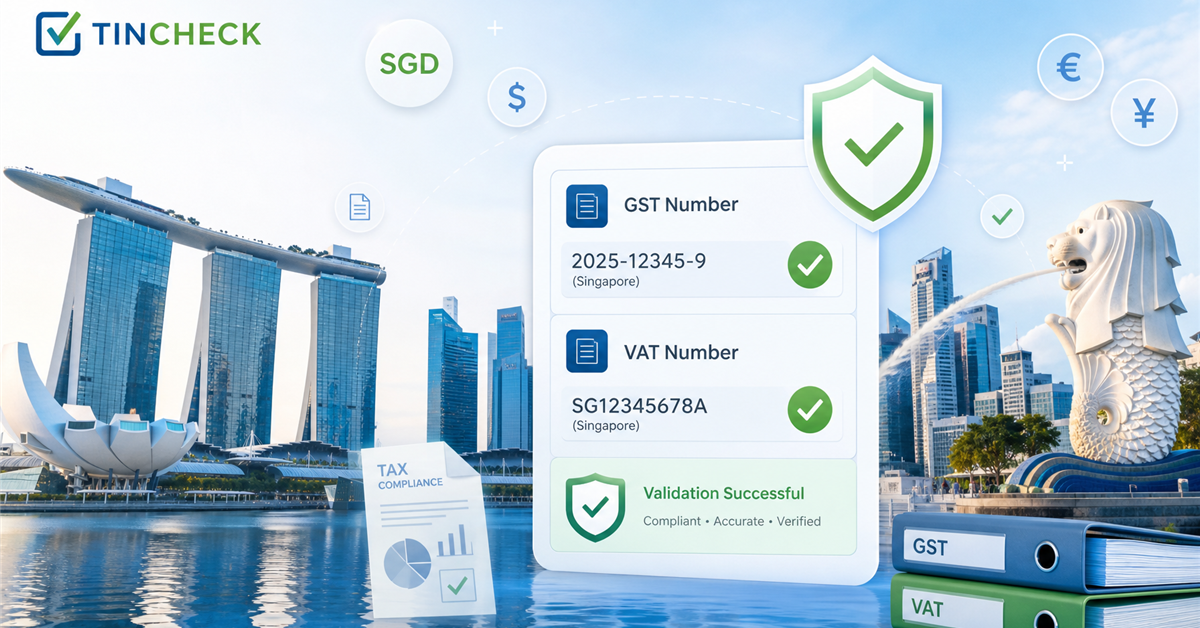
Singapore GST Number Validation Guide (2026)
Updated for 2026: Accurate GST number validation is essential for businesses operating in Singapore or trading internationally. Verifying GST registration numbers helps companies remain compliant with Inland Revenue Authority of Singapore (IRAS) regulations, prevent supplier fraud, reduce accounting errors, and streamline procurement workflows.
For businesses working with overseas suppliers or customers, validating foreign VAT numbers is equally important for international tax compliance, invoice accuracy, and cross-border trade operations.
This guide explains how Singapore businesses can validate GST numbers, verify international VAT numbers, automate compliance workflows, and reduce operational risk through supplier verification best practices.
What Is a Singapore GST Number?
A Goods and Services Tax (GST) number is a tax registration identifier issued by the Inland Revenue Authority of Singapore (IRAS) to GST-registered businesses.
Businesses with annual taxable revenue exceeding S$1 million are generally required to register for GST and charge GST on taxable supplies.
As of 2026, Singapore’s GST rate remains 9%.
Singapore GST numbers are commonly linked to a company’s Unique Entity Number (UEN), which serves as the primary business identifier.
Example of a Singapore GST Number
201933217M-00
Before processing invoices or onboarding suppliers, businesses should verify that the GST number matches the correct legal entity and registration status.
GST vs VAT: Understanding the Difference
Singapore officially uses GST (Goods and Services Tax), while many other countries use VAT (Value Added Tax). Although both systems are consumption taxes, the terminology, validation databases, and compliance rules differ by jurisdiction.
| Tax System | Used In | Authority Example |
|---|---|---|
| GST | Singapore, Australia, New Zealand | IRAS |
| VAT | European Union and many other countries | VIES / Local Tax Authorities |
Why Accurate GST Number Validation Matters
1. Tax Compliance
Validating GST numbers helps businesses comply with IRAS regulations and reduces the risk of penalties, tax disputes, or rejected tax claims.
2. Accurate Invoice Processing
Incorrect GST registration details can result in invoice mismatches, reconciliation issues, and inaccurate GST reporting.
3. Fraud Prevention
Supplier fraud involving fake or inactive GST numbers is increasingly common across global supply chains. Validation helps businesses detect suspicious vendors before transactions occur.
4. Faster Supplier Onboarding
Automated GST verification improves procurement efficiency and reduces manual verification during vendor onboarding.
5. Cross-border Tax Compliance
Businesses working with overseas partners often need to validate VAT numbers to determine tax exemption eligibility and ensure international compliance.
How to Validate GST Numbers in Singapore
1. Use the IRAS GST Registered Business Search
The IRAS GST Registered Business Search tool allows businesses to verify whether a supplier or company is actively registered for GST in Singapore.
Step-by-Step GST Validation Process
- Visit the official IRAS GST Registered Business Search portal.
- Enter the GST number or UEN.
- Review the company registration status.
- Confirm the legal entity name matches supplier documentation.
- Store validation evidence for compliance and audit records.
2. Verify the GST Number Format
Singapore GST numbers generally follow a structured format linked to the company’s UEN.
Example: 201933217M-00
Businesses should implement automatic format validation rules inside ERP systems or accounting software to minimize data entry errors.
3. Check Registration Status Regularly
A GST registration can become inactive or cancelled over time. Businesses should periodically revalidate supplier tax details to maintain compliance.
How to Validate a Singapore UEN
A Unique Entity Number (UEN) is a standard identification number assigned to businesses and legal entities operating in Singapore.
Validating a UEN helps businesses confirm that:
- The company legally exists
- The business information is accurate
- The GST registration matches the correct legal entity
- The supplier onboarding data is valid
Why UEN Validation Matters
Many procurement and finance teams validate both the UEN and GST number simultaneously to reduce supplier fraud risk and improve vendor compliance accuracy.
Common GST Validation Errors
- Typographical mistakes in GST numbers
- Inactive GST registration status
- Mismatch between GST number and legal entity name
- Outdated supplier registration information
- Invalid UEN structure
- Incorrect invoice tax details
Risks of Using Invalid GST Numbers
Failing to validate GST numbers can expose businesses to significant operational and compliance risks.
- Tax penalties and fines
- Rejected GST input tax claims
- Invoice processing delays
- Supplier fraud exposure
- Audit complications
- Financial reporting inaccuracies
- Regulatory compliance issues
How Businesses Automate GST Validation
Many organizations automate GST and VAT validation through APIs integrated directly into:
- ERP platforms
- Accounting software
- Procurement systems
- Supplier onboarding workflows
- Accounts payable automation tools
- Invoice validation systems
Automated validation enables real-time compliance checks while reducing manual workload and human error.
Benefits of Automated GST Validation
| Manual Validation | Automated Validation |
|---|---|
| Slow manual checks | Real-time verification |
| Higher human error risk | Improved accuracy |
| Limited scalability | Bulk validation support |
| Manual audit documentation | Automated audit trail |
Bulk GST Number Validation
Large enterprises often validate thousands of supplier records simultaneously using bulk GST validation tools.
Bulk validation workflows commonly support:
- CSV uploads
- Supplier master databases
- ERP synchronization
- Batch verification requests
- Vendor compliance screening
How to Validate International VAT Numbers
1. Use the EU VIES VAT Validation System
Singapore businesses working with European suppliers or customers can use the VAT Information Exchange System (VIES) to validate EU VAT numbers.
The VIES system confirms whether a VAT number is valid within the European Union.
2. Verify Non-EU VAT Numbers Through Local Authorities
Outside the EU, VAT validation processes differ by country. Businesses should verify tax registration details using official government databases whenever possible.
3. Use Global VAT Validation APIs
Third-party compliance solutions allow businesses to automate VAT validation across multiple countries through a single API integration.
Industries That Commonly Validate GST Numbers
- Ecommerce businesses
- Marketplaces
- Import/export companies
- Logistics providers
- SaaS companies
- Financial services firms
- Procurement organizations
- Accounts payable teams
GST Validation Workflow Best Practices
- Collect supplier GST number and company details
- Validate the GST number against IRAS records
- Verify the legal entity and UEN match
- Store validation evidence for audit purposes
- Schedule periodic supplier revalidation
- Automate recurring compliance checks where possible
Best Practices for GST and VAT Validation
Maintain Validation Records
Keep documentation showing when and how GST or VAT numbers were verified.
Train Finance and Procurement Teams
Employees handling invoices, procurement, and supplier onboarding should understand GST validation procedures and fraud risks.
Automate Compliance Processes
Automation improves compliance accuracy, accelerates approvals, and reduces operational costs.
Monitor Regulatory Changes
Tax rules and reporting requirements evolve frequently. Businesses should regularly review compliance procedures and validation workflows.
Real-world Use Cases for GST Validation
Supplier Onboarding
Procurement teams validate GST registration details before approving suppliers.
Invoice Compliance Checks
Finance teams verify GST numbers before processing invoices or claiming input tax credits.
Cross-border Transactions
International sales and finance teams validate VAT numbers to determine tax exemption eligibility.
Fraud Detection
Businesses use automated tax ID validation to identify suspicious suppliers and reduce financial risk.
Frequently Asked Questions
How do I check if a GST number is valid in Singapore?
You can validate a Singapore GST number using the official IRAS GST Registered Business Search tool.
What is a UEN in Singapore?
A UEN (Unique Entity Number) is the standard identification number assigned to businesses and legal entities operating in Singapore.
Is GST the same as VAT?
GST and VAT are similar consumption tax systems, but different countries use different terminology and validation mechanisms.
Can GST registration status change?
Yes. A company’s GST registration may become inactive or be cancelled over time.
Why should businesses automate GST validation?
Automation reduces manual work, improves compliance accuracy, prevents fraud, and accelerates invoice processing.
How often should GST numbers be revalidated?
Businesses should periodically revalidate supplier GST numbers, especially before major transactions or annual compliance reviews.
Conclusion
Accurate GST number validation is critical for Singapore businesses seeking to maintain tax compliance, prevent supplier fraud, and improve operational efficiency.
Using official validation tools, automating compliance workflows, and implementing supplier verification best practices helps organizations reduce risk while improving financial accuracy.
As global tax regulations become increasingly complex, businesses that proactively validate GST and VAT numbers strengthen audit readiness, support international trade compliance, and build more trusted commercial relationships.
Need automated GST or VAT validation? Modern compliance APIs and supplier verification platforms can help businesses validate tax registration numbers in real time, streamline onboarding, and reduce compliance risk at scale.