UK TIN Number Explained: Which Tax Identification Number Should You Use?
Looking for a UK TIN number? In the United Kingdom, there is no single Tax Identification Number (TIN). Instead, individuals and businesses use alternatives such as the NINO, UTR, or VAT number depending on the situation. Completing international financial forms can be confusing—especially for CRS or FATCA self-certifications—but this guide explains exactly what to use.
Why Do International Forms Ask for a TIN?
Tax Identification Numbers are essential for financial institutions and tax authorities globally. TINs help them:
- Identify account holders and taxpayers accurately
- Fulfill anti-money laundering and compliance obligations
- Meet requirements imposed by the Common Reporting Standard (CRS) and the Foreign Account Tax Compliance Act (FATCA)
Most countries issue one standardized TIN, but the UK’s multi-identifier approach leads to confusion and common application errors.
What Counts as a TIN in the UK?
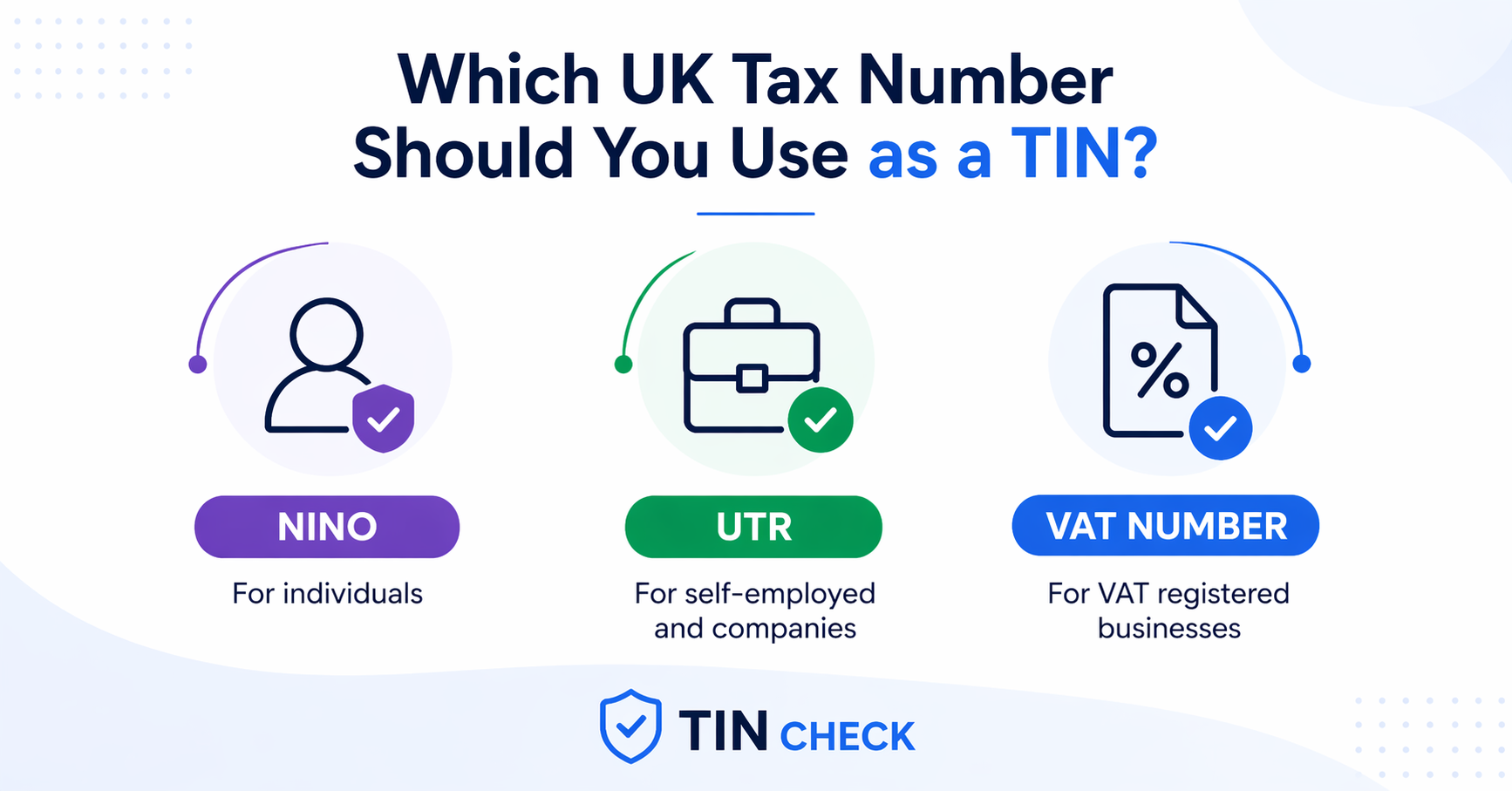
In the UK, the number entered as a TIN varies by taxpayer type and context:
- NINO (National Insurance Number) — Individuals
- UTR (Unique Taxpayer Reference) — Self-employed persons, businesses, and entities
- VAT Number — VAT-registered businesses/entities
Choosing the right number ensures your forms are processed without delays.
UK TIN Comparison Table
| Type | Who Uses It | Format | Purpose |
|---|---|---|---|
| NINO | Individuals | AB123456C | Personal tax & social security |
| UTR | Self-employed & companies | 10 digits | Tax reporting |
| VAT Number | VAT businesses | GB123456789 | VAT transactions |
What to Enter as a UK TIN: Step-by-Step Guidance
- Individuals: Enter your NINO (e.g.,
AB123456C). This is used for most personal account openings, fintech apps, and CRS/FATCA self-certifications. - Self-Employed Individuals: Use your UTR—a 10-digit code for self-assessment taxpayers and sole traders.
- Companies or Entities: Provide your UTR (not Company Registration Number) as the tax identifier. Optionally, add a VAT number if the context involves invoicing or cross-border transactions.
- VAT-Specific Forms: Use your VAT Number (format:
GB123456789) if required by the institution or when trading internationally.
Tip: Use our TIN validation tool to avoid errors before submission.
Real-World Scenarios: Which UK TIN Should You Use?
- Opening a bank account: NINO for individuals; UTR for companies
- Fintech platforms/payment apps: NINO for personal accounts; UTR or VAT for business users
- CRS/FATCA declarations: NINO for individuals; UTR for entities
Always check the context and instructions. Some international forms may generically request a “TIN,” but expect the most relevant UK identifier listed above.
Risks of Entering the Wrong UK TIN
Incorrectly completing the TIN section can result in:
- Rejected applications or failed onboarding
- Delays in account opening and verification
- Regulatory non-compliance and possible fines
- Inaccurate tax reporting to authorities
This risk is heightened for CRS and FATCA processes, where inconsistencies may trigger compliance scrutiny.
Avoid delays: Validate your number using our TIN checker before submitting forms.
Common Mistakes to Avoid
- Using your company registration number (CRN) in place of a TIN—unless clearly specified
- Supplying a VAT number for personal financial forms
- Substituting your UTR when a NINO is specifically required
- Omitting the
GBprefix on VAT numbers - Typos, extra spaces, or incorrect number lengths
Careful review and understanding of the required identifier will save time and frustration.
Can UK TINs Be Verified on These Forms?
- NINO: Only the format can be checked—there’s no public UK NINO database.
- UTR: Not publicly searchable; only format verification is possible.
- VAT Number: Can be validated using official EU or HMRC databases.
Most systems perform basic formatting checks, so incorrect details may go unnoticed until a manual review occurs.
Expert Guidance: When in Doubt
- For individuals: Default to NINO
- For businesses/entities: Use UTR unless VAT applies
- For VAT-specific forms: Always supply the VAT number, with the correct prefix
If you’re ever unsure, refer to institutional instructions or seek professional advice.
FAQs About UK TIN
Does the UK have a TIN number?
No, the UK does not have a single universal TIN. Instead, it uses identifiers such as NINO and UTR.
Is UTR the same as TIN?
UTR is commonly used as a TIN equivalent for tax purposes in the UK.
Can I use NINO as a TIN?
Yes, in most cases individuals should use their NINO.
Where can I find my UTR?
You can find your UTR on HMRC letters, tax returns, or your personal tax account.
Helpful Resources
Unsure which number is right for your situation? See our comparison of UK tax numbers for more insights and real-world examples.
Validate Your UK TIN Before Submission
To prevent rejections and speed up compliance, always confirm the correct formatting of your chosen UK identifier before submitting international forms. Use a validation tool if possible—this simple step can save time, reduce compliance risk, and ensure seamless onboarding across banking and fintech platforms.
Conclusion
While the UK does not offer a single, catch-all TIN, you can ensure compliance and efficient processing by selecting the right identifier for the right context. Accurate entry is essential for smooth onboarding, precise reporting, and meeting the demands of global regulatory frameworks like CRS and FATCA.
Need to verify a UK TIN? Use our TIN validation tool for instant checks and peace of mind before you submit!