Last updated: May 2026
How to Get a Tax Identification Number (TIN) in Saudi Arabia
Quick answer: Businesses and taxable entities operating in Saudi Arabia must register with the Zakat, Tax and Customs Authority (ZATCA) to obtain a Tax Identification Number (TIN) and comply with VAT, zakat, and corporate tax obligations.
If you are starting a business, freelancing, expanding a foreign company, or selling goods and services in Saudi Arabia, obtaining the correct tax registration is essential for legal compliance and smooth operations.
This guide explains how to obtain a Tax Identification Number (TIN) in Saudi Arabia, VAT registration thresholds, required documents, foreign company obligations, e-invoicing requirements, and how to complete registration through ZATCA step by step.
What Is a Tax Identification Number (TIN) in Saudi Arabia?
A Tax Identification Number (TIN) is a unique identifier issued by the Zakat, Tax and Customs Authority (ZATCA) to identify businesses and taxable entities for tax purposes.
The TIN is commonly used for:
- VAT registration and filing
- Zakat compliance
- Corporate income tax obligations
- Issuing VAT-compliant invoices
- E-invoicing (FATOORA)
- Tax payments and official tax communication
What Is ZATCA?
ZATCA is Saudi Arabia’s authority responsible for:
- VAT administration
- Zakat collection
- Corporate taxation
- Customs regulation
- E-invoicing enforcement
- Taxpayer compliance and audits
Who Needs a Tax ID in Saudi Arabia?
You may need a Tax Identification Number if you are:
- A Saudi company carrying out taxable activities
- A freelancer or independent contractor
- An ecommerce seller
- A foreign company operating in Saudi Arabia
- A sole proprietor
- A business required to register for VAT
- A foreign branch supplying taxable services locally
Most expatriate employees do not require a separate individual TIN because employment-related obligations are usually handled through the employer.
Difference Between TIN, VAT Number, and CR Number
| Type | Meaning | Purpose |
|---|---|---|
| TIN | Tax Identification Number | General tax compliance and identification |
| VAT Number | VAT registration reference | Used for VAT invoicing and VAT filing |
| CR Number | Commercial Registration Number | Official business registration identifier |
VAT Registration Thresholds in Saudi Arabia
| Registration Type | Revenue Threshold |
|---|---|
| Mandatory VAT Registration | 375,000 SAR annually |
| Voluntary VAT Registration | 187,500 SAR annually |
Businesses exceeding the mandatory threshold must register for VAT with ZATCA.
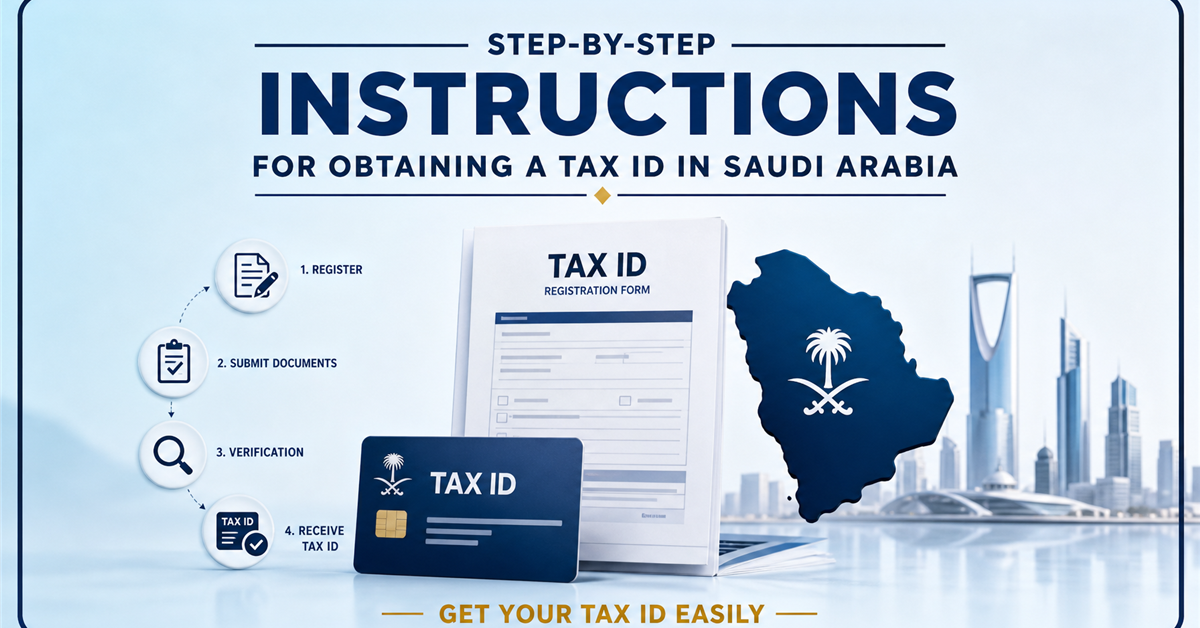
How to Get a Tax ID in Saudi Arabia
Step 1: Obtain a Commercial Registration (CR) Number
Most businesses must first register through the Saudi Ministry of Commerce and obtain a Commercial Registration (CR) number.
Step 2: Create a ZATCA Account
Create an account on the official ZATCA portal:
You will typically need:
- Email address
- Mobile phone number
- Business information
- CR number
OTP verification is required during registration.
Step 3: Prepare Required Documents
Commonly required documents include:
- Saudi ID or Iqama
- Passport copy
- Commercial Registration certificate
- Business license
- Business address details
- Description of business activities
- Bank account details
Foreign businesses may need additional incorporation documents and translated paperwork.
Step 4: Complete Tax Registration
After logging into the portal:
- Select the appropriate tax registration service
- Enter business and tax details
- Choose VAT registration if applicable
- Review all information carefully before submission
Incorrect information may delay approval or trigger compliance reviews.
Step 5: Upload Supporting Documents
Upload digital copies of all required documentation.
Documents should be:
- Valid and current
- Readable and high quality
- Consistent with CR records
Step 6: Submit the Application
ZATCA reviews the submission and may request:
- Additional verification
- Supporting documents
- Clarifications regarding business activities
Step 7: Receive Your TIN
Once approved, the Tax Identification Number becomes available through the ZATCA dashboard.
You should:
- Save digital copies securely
- Use the number on invoices
- Reference the TIN in future tax filings
How Long Does Tax Registration Take?
Most applications are processed within several business days if:
- Documentation is complete
- Business details are accurate
- No additional compliance checks are required
Complex foreign company structures may require additional review time.
Tax Registration for Foreign Companies
Foreign companies may need Saudi tax registration if they:
- Provide taxable services in Saudi Arabia
- Sell goods locally
- Operate ecommerce activities targeting Saudi customers
- Maintain local inventory or offices
- Conduct VAT-taxable activities in the Kingdom
Some foreign entities may also require:
- Local tax representatives
- Additional compliance documentation
- Special VAT registration procedures
E-Invoicing Requirements (FATOORA)
Saudi Arabia requires many businesses to comply with mandatory electronic invoicing regulations known as FATOORA.
- Issue compliant electronic invoices
- Integrate invoicing systems with ZATCA
- Store invoices digitally
- Generate QR-code-compliant invoices
Common Registration Mistakes
- Registering too late after exceeding VAT thresholds
- Using incorrect CR information
- Selecting the wrong registration category
- Uploading expired or unclear documents
- Ignoring e-invoicing obligations
- Missing filing deadlines
Possible Penalties for Non-Compliance
| Violation | Possible Consequence |
|---|---|
| Late VAT registration | Financial penalties and backdated VAT |
| Missing VAT filings | Fines and compliance audits |
| Incorrect invoices | Regulatory violations and penalties |
Frequently Asked Questions
Who needs a Tax ID in Saudi Arabia?
Businesses, freelancers, foreign investors, and taxable entities operating in Saudi Arabia generally require registration through ZATCA.
Is VAT registration mandatory?
Yes. VAT registration becomes mandatory once annual taxable revenue exceeds 375,000 SAR.
Can foreign companies obtain a Saudi Tax ID?
Yes. Foreign companies conducting taxable activities in Saudi Arabia may require tax registration through ZATCA.
How long does registration take?
Most applications are processed within several business days if all required documentation is complete.
What happens if I fail to register?
Businesses may face penalties, operational restrictions, backdated VAT liabilities, and compliance investigations.
Conclusion
Obtaining a Tax Identification Number (TIN) in Saudi Arabia is essential for businesses operating legally and maintaining compliance with VAT, zakat, and tax regulations.
Foreign companies, freelancers, ecommerce sellers, and growing businesses should monitor VAT thresholds carefully and ensure compliance with Saudi e-invoicing requirements.
Official resources: