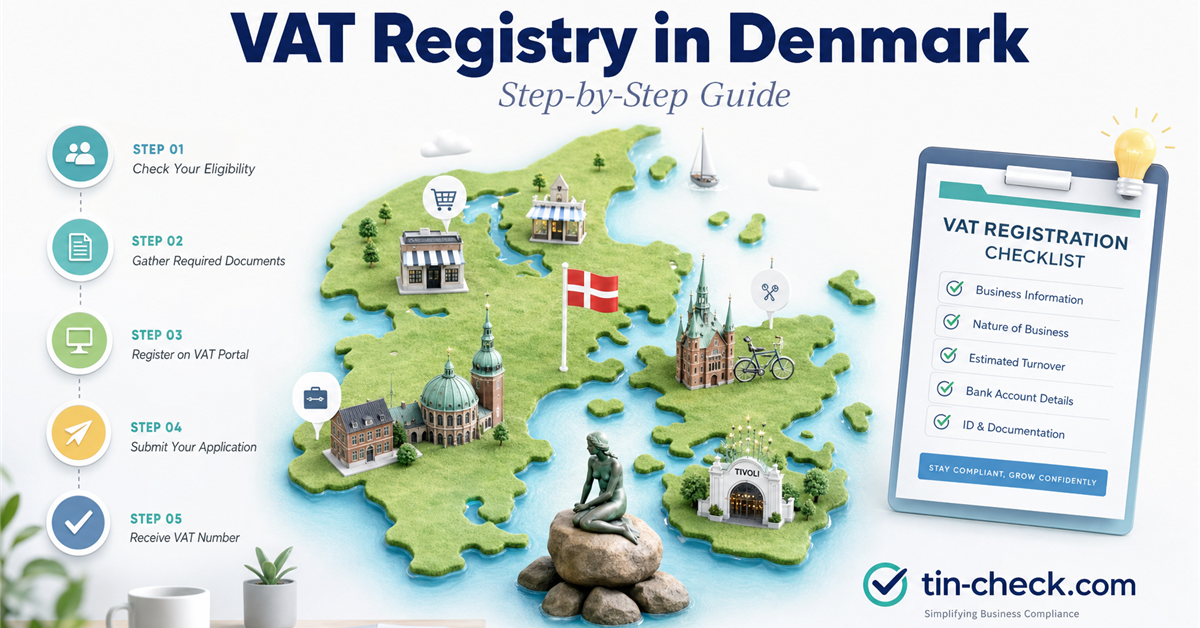
How to Register for VAT in Denmark: Complete Step-by-Step Guide for Small Businesses
Quick answer: Businesses in Denmark must register for VAT (“Moms”) when their annual taxable turnover exceeds 50,000 DKK within a rolling 12-month period.
If you are starting a business, freelancing, opening an ecommerce store, or expanding operations into Denmark, understanding Danish VAT registration rules is essential. Proper registration helps businesses remain compliant, issue valid invoices, reclaim VAT on expenses, and avoid penalties from the Danish Tax Agency.
This guide explains how VAT registration works in Denmark, including thresholds, CVR numbers, registration steps, filing obligations, and common compliance mistakes.
What Is VAT (Moms) in Denmark?
VAT in Denmark is known as Moms. It is a consumption tax applied to most goods and services sold in Denmark.
The standard Danish VAT rate is:
25%
Businesses registered for VAT must:
- Charge VAT on taxable sales
- Collect VAT from customers
- Submit VAT returns to the Danish Tax Agency
- Pay collected VAT to the authorities
- Reclaim VAT paid on eligible business expenses
VAT registration is managed by the Danish Tax Agency (Skattestyrelsen).
Who Must Register for VAT in Denmark?
You generally must register for VAT if:
- Your annual turnover exceeds 50,000 DKK within a 12-month period
- You sell taxable goods or services in Denmark
- You import goods into Denmark
- You provide intra-EU taxable services
- You operate an ecommerce business subject to Danish VAT rules
Even below the threshold, voluntary VAT registration is possible and may help startups and freelancers reclaim VAT on business expenses.
CVR Number vs VAT Number in Denmark
Many entrepreneurs confuse Danish registration numbers. Here is the difference:
| Term | Meaning | Purpose |
|---|---|---|
| CVR Number | Business registration number | Identifies a company in Denmark |
| VAT Number (Momsnummer) | VAT identification number | Used for VAT reporting and invoicing |
| SE Number | Tax identification reference | Used in specific tax situations |
In many cases, the Danish VAT number is linked to the CVR number.
Step-by-Step Guide to VAT Registration in Denmark
Step 1: Register Your Business
Before registering for VAT, your business must first obtain a CVR number.
You can register online through:
Virk.dk – Danish Business Authority
You will usually need:
- Business name
- Description of business activities
- Business address
- Owner identification details
- Estimated annual turnover
Step 2: Prepare Required Documentation
Prepare the following documents before starting VAT registration:
- Passport or valid identification
- Danish CPR number (if applicable)
- CVR number
- Business address and contact information
- Bank account details
- Description of business activities
- Estimated revenue figures
Step 3: Access TastSelv Erhverv
VAT registration is completed online through:
You typically log in using:
- MitID
- NemID (legacy access in limited cases)
Step 4: Complete the VAT Registration Form
Provide accurate information regarding:
- Business activities
- Estimated turnover
- Expected VAT obligations
- Import and export activities
- EU trading activities
Incorrect information may delay approval or trigger compliance reviews.
Step 5: Receive VAT Confirmation
Processing usually takes between 1 to 3 weeks.
Once approved:
- Your business becomes officially VAT registered
- You receive a Danish VAT number
- You may legally issue VAT invoices
Step 6: Start Charging VAT
After approval, businesses must:
- Charge 25% VAT on taxable sales
- Display VAT correctly on invoices
- Maintain proper bookkeeping records
- Track collected and deductible VAT
Step 7: File VAT Returns
VAT returns are submitted electronically through TastSelv Erhverv.
Depending on business size, filings may occur:
- Monthly
- Quarterly
- Semi-annually
VAT returns normally include:
- Total taxable sales
- VAT collected from customers
- VAT paid on business expenses
- Net VAT payable or refundable
VAT Registration for Foreign Companies
Foreign businesses may also require Danish VAT registration if they:
- Store inventory in Denmark
- Import goods into Denmark
- Sell goods locally
- Operate ecommerce activities targeting Danish consumers
- Provide taxable services within Denmark
Additional EU VAT rules may apply for cross-border transactions.
Common VAT Registration Mistakes
- Registering too late after exceeding the threshold
- Issuing invoices without valid VAT details
- Ignoring EU VAT obligations
- Using incorrect accounting methods
- Failing to maintain proper records
- Missing VAT filing deadlines
Penalties and backdated VAT assessments may apply in cases of non-compliance.
Tips for Small Businesses
- Use accounting software compatible with Danish VAT reporting
- Monitor turnover regularly to avoid missing the registration threshold
- Keep digital records of invoices and receipts
- Understand EU VAT rules when trading internationally
- Consult a tax professional for complex setups
Frequently Asked Questions
Can freelancers register for VAT in Denmark?
Yes. Freelancers and self-employed individuals must register for VAT if taxable turnover exceeds 50,000 DKK.
Can I voluntarily register for VAT?
Yes. Voluntary registration is allowed and may help businesses reclaim VAT on expenses.
How long does VAT registration take in Denmark?
Most applications are processed within 1 to 3 weeks.
What happens if I fail to register for VAT?
Businesses may face penalties, interest charges, backdated VAT liabilities, and compliance investigations.
Can foreign companies obtain a Danish VAT number?
Yes. Foreign companies carrying out taxable activities in Denmark may need Danish VAT registration.
Conclusion
VAT registration in Denmark is an important step for businesses operating legally and efficiently. Understanding the Danish VAT system, obtaining a CVR number, and filing VAT returns correctly helps businesses avoid penalties and improve financial management.
Official resources:
Need help registering for VAT in Denmark? Professional assistance can help ensure compliance is completed correctly from the beginning.